OVERVIEW
Meet Hawthorn
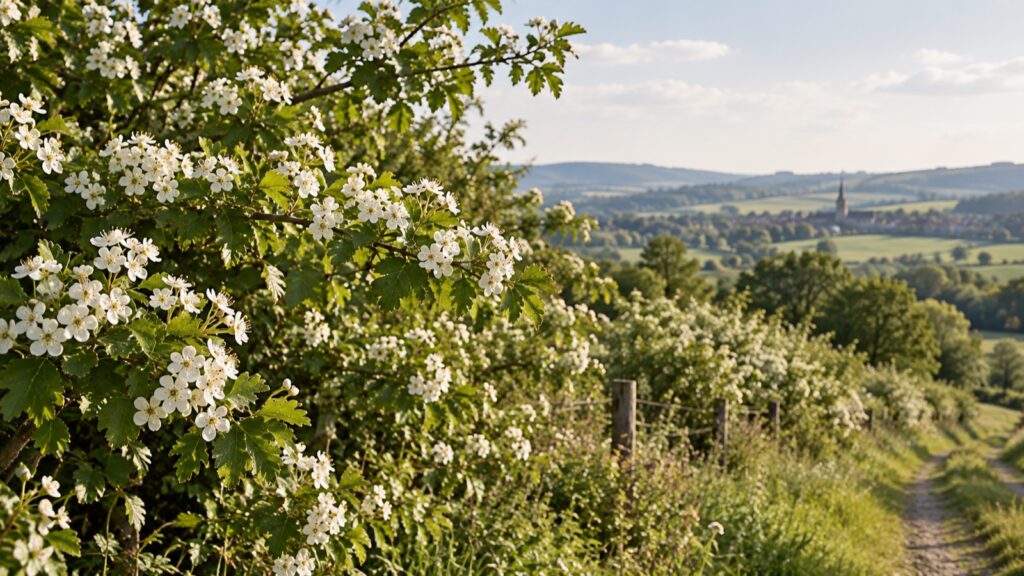
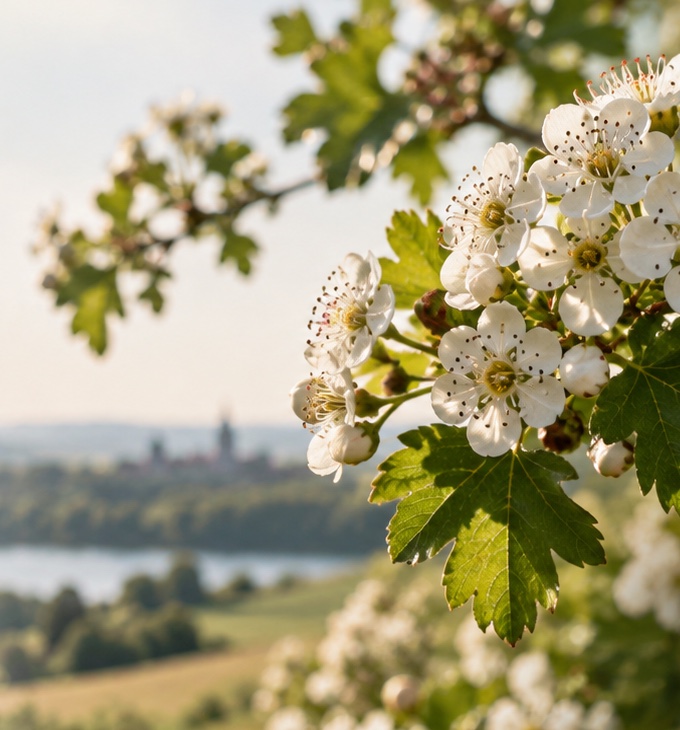
Hawthorn is not a single plant species but a group within the genus Crataegus. Several closely related hawthorn species occur across Europe and can be difficult to distinguish from one another.
In Germany the plant is widely known as Weißdorn. It is familiar in hedgerows, field margins, woodland edges and scrub, where thorn-bearing shrubs or small trees produce masses of pale blossom in spring followed by red fruits later in the year.
For medicinal purposes the part of the plant matters. European herbal medicine particularly recognises hawthorn leaf with flower, Crataegi folium cum flore. Fruit, flowers and leaves may all come from hawthorn, but they should not automatically be treated as interchangeable when discussing research.
HAWTHORN IDENTIFICATION
Crataegus spp. · Weißdorn
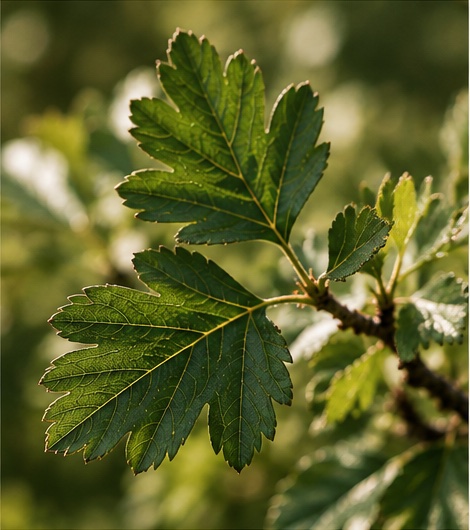

LEAVES
Distinctive lobed leaves, typically with 3–7 lobes. Leaf shape, size and depth of lobes can vary between Crataegus species.
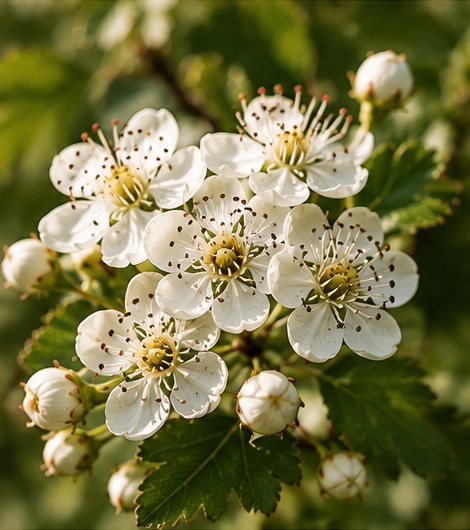

FLOWERS
Clusters of small, typically five-petalled white or pale pink flowers, often with prominent stamens, appearing in spring.
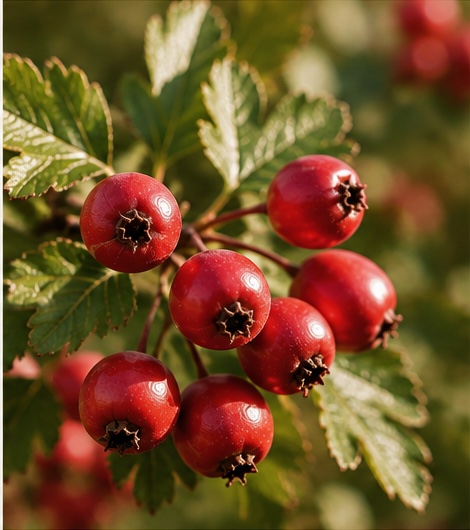
FRUITS
Small red fruits, known as haws, develop later in the year, usually from late summer into autumn.
TRADITION
A Plant with a Long History
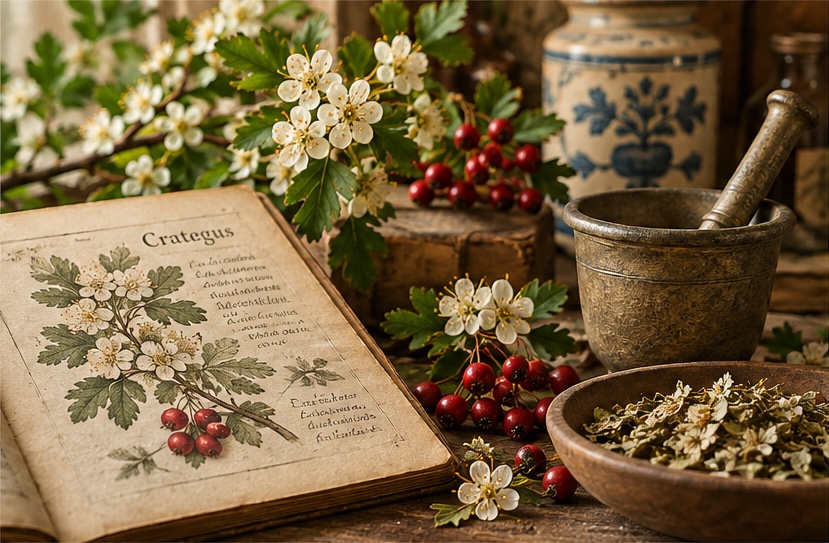
Hawthorn’s place in European herbal medicine can be traced back nearly 2,000 years. The Greek physician Dioscorides mentioned a plant traditionally identified as hawthorn in his first-century work De Materia Medica, one of the most influential texts in the history of herbal medicine.
Its use continued through European herbal traditions, but hawthorn became particularly prominent as a heart remedy during the nineteenth century. An Irish physician known as Dr Green used a preparation made from hawthorn berries for patients with heart complaints. Following his death in 1894, the identity of his remedy became more widely known.
By the early twentieth century, hawthorn had gained an established place in European herbal practice. Over time, hawthorn leaf with flower, known as Crataegi folium cum flore, became an important material in modern European herbal medicine.
Today, the European Medicines Agency recognises traditional medicinal uses for certain defined hawthorn leaf-and-flower preparations, connecting centuries of herbal practice with modern regulatory assessment.
RESEARCH
What Human Research Tells Us
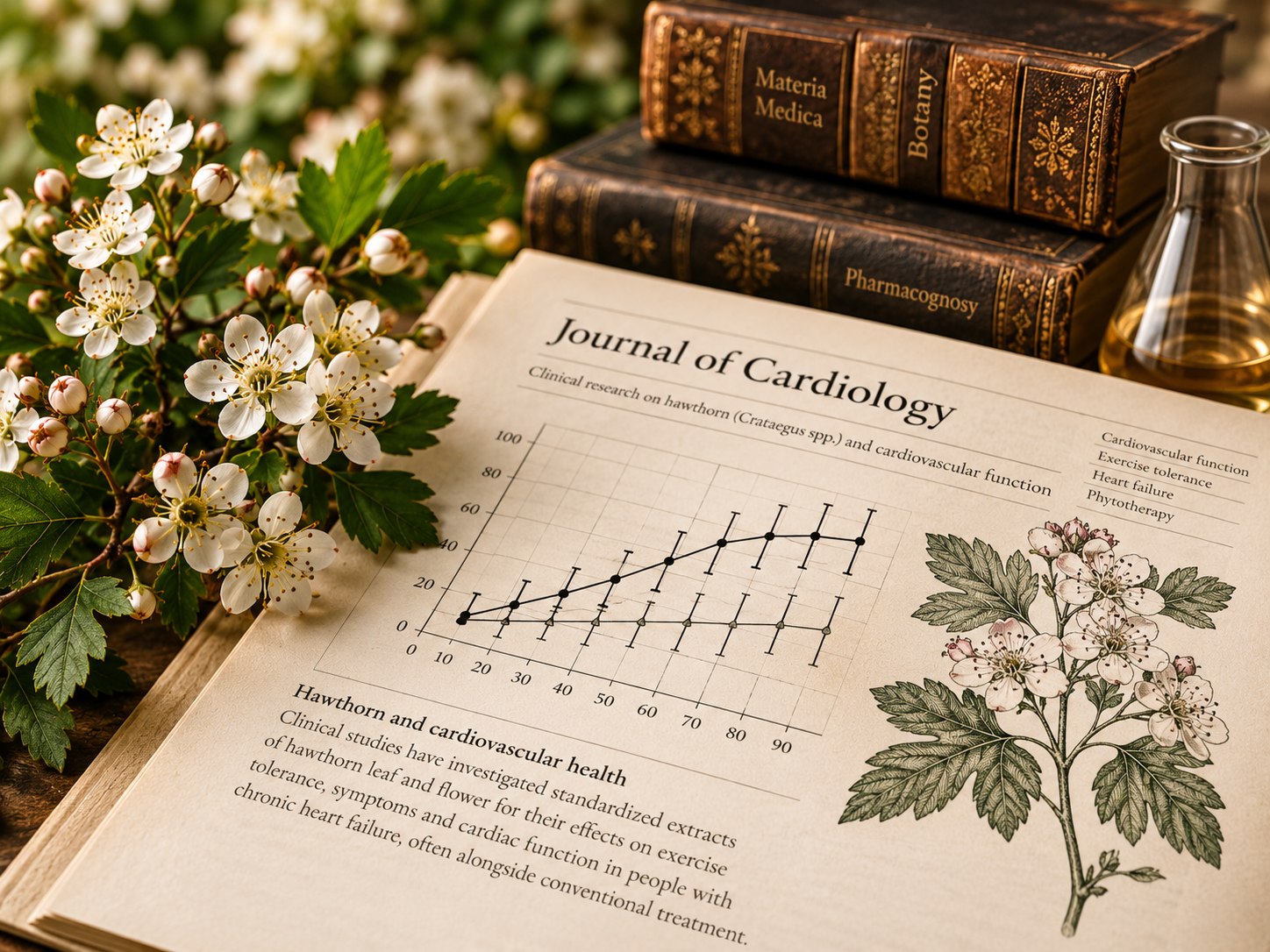
Hawthorn has attracted scientific interest for its potential effects on cardiovascular health. Human studies have investigated particular hawthorn preparations in several contexts, including chronic heart failure and blood pressure. The findings offer a more detailed picture of the plant’s potential, while highlighting the importance of the extract used and the outcomes measured.
Some controlled trials have reported encouraging results. Earlier studies involving people with chronic heart failure found improvements in exercise tolerance and symptoms such as breathlessness and fatigue with certain hawthorn extracts. More recent reviews have also examined whether hawthorn preparations may influence blood pressure, although the findings are not yet consistent enough to establish a reliable clinical benefit.
Larger cardiovascular trials have produced mixed results, particularly when examining major outcomes such as hospitalisation or cardiovascular death. Taken together, the research suggests areas of genuine scientific interest, but the evidence differs between preparations, study populations and health outcomes.
14 trials
A systematic review of controlled trials reported improvements compared with placebo in certain measures of exercise tolerance and symptoms, including breathlessness and fatigue, among people with chronic heart failure. These findings were encouraging, although study quality, sample sizes and the preparations investigated varied.
2,681 patients
This large clinical trial investigated the defined hawthorn extract WS 1442 alongside conventional heart-failure treatment. It did not demonstrate a statistically significant reduction in its primary combined cardiac-event outcome. An exploratory subgroup analysis suggested a possible benefit for sudden cardiac death in certain patients, but this finding requires cautious interpretation.
2025 · SYSTEMATIC REVIEW & META-ANALYSIS
6 trials
A 2025 review pooled six earlier randomised trials, published between 2002 and 2021, involving 428 participants in differing clinical settings. It reported a reduction in systolic blood pressure, while the overall diastolic result was inconclusive. Large differences between studies limit confidence in a reliable clinical benefit.
PREPARATION
From Plant to Tincture
Transforming a medicinal plant into a botanical extract involves more than simply placing herbs in liquid. The identity of the plant, the parts selected, the extraction medium and the preparation conditions can all influence the composition of the finished extract.
Haus der Heilpflanzen is exploring alcohol-free botanical preparations, with glycerine-and-water extraction among the approaches under consideration. The eventual method will be determined with our manufacturing partner, based on the characteristics of each plant and the quality requirements of the intended product.
The stages below illustrate the principles of botanical extraction. They are not a confirmed manufacturing protocol, and the final process may differ once formulation and production specifications have been established.
-
 01
Botanical Selection & Preparation
Correct identification of the plant species and relevant plant parts is essential. Botanical material may then be sorted, cleaned, cut or dried depending on the intended extraction method, with attention to quality and traceability.
-
 02
Extraction
Alcohol-free extraction may involve glycerine and water to recover selected botanical constituents. The extraction medium, proportions and conditions must be determined according to the plant and the intended formulation.
-
03
Filtration & Refinement
Following extraction, the liquid may be separated from the remaining botanical material through filtration or clarification. The method depends on the preparation and its required quality specifications.
-
04
Finished Alcohol-Free Extract
The resulting preparation may be filled into suitable containers following appropriate quality and stability assessments. Its final composition, concentration and packaging will depend on the validated formulation.
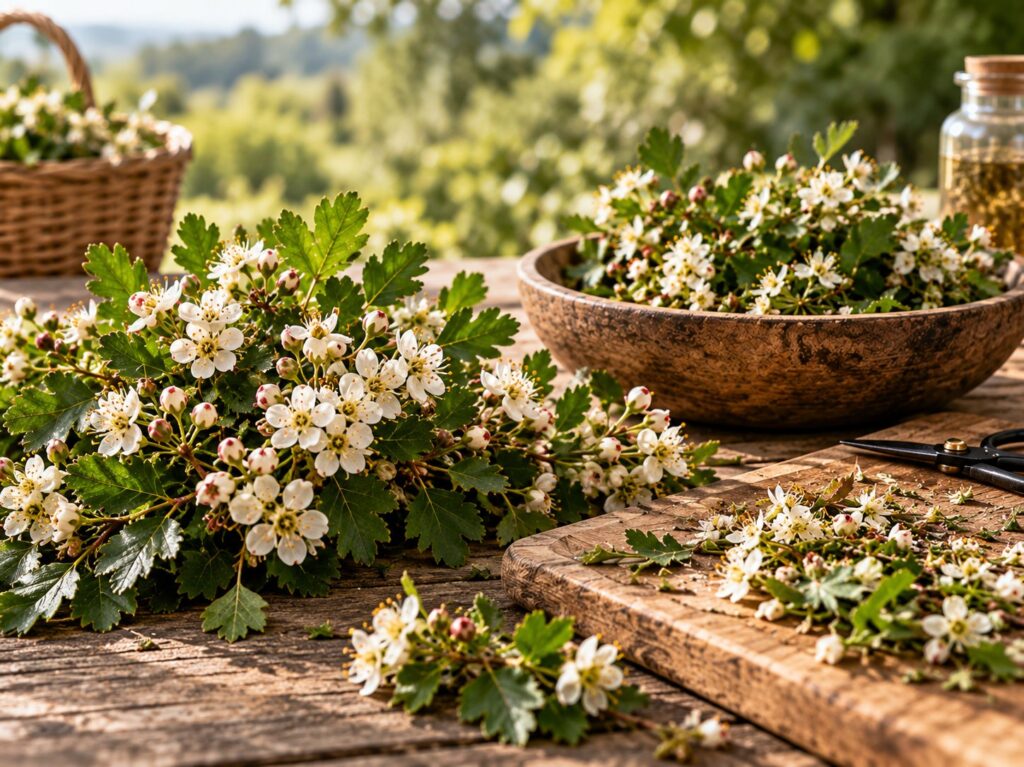
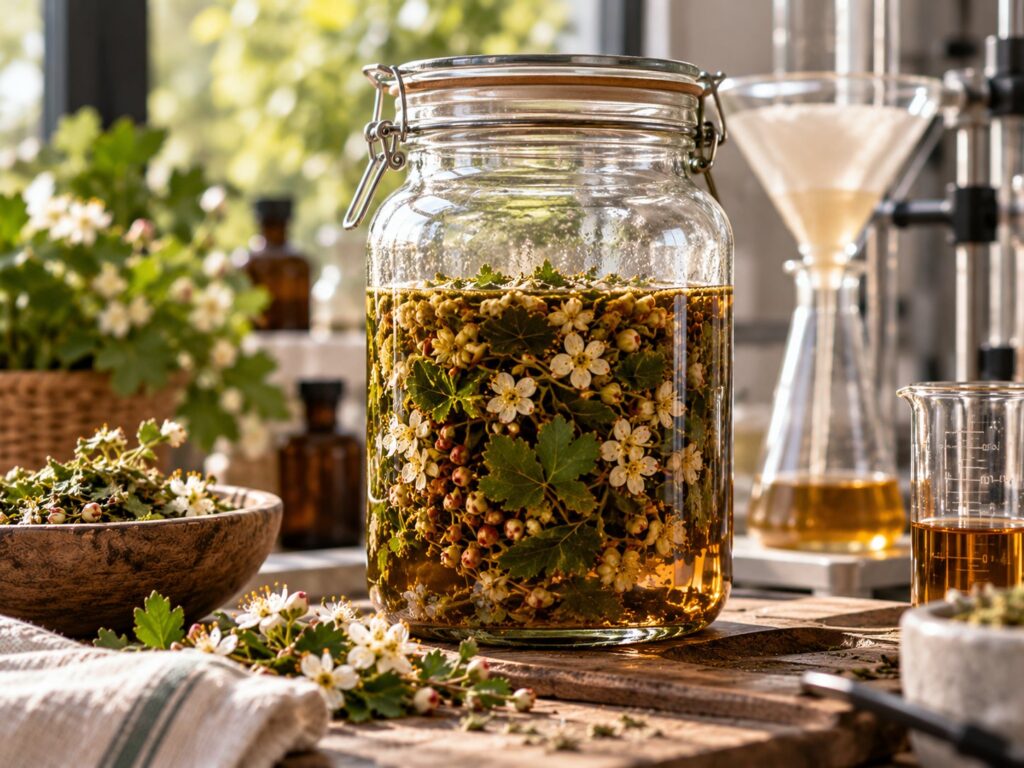
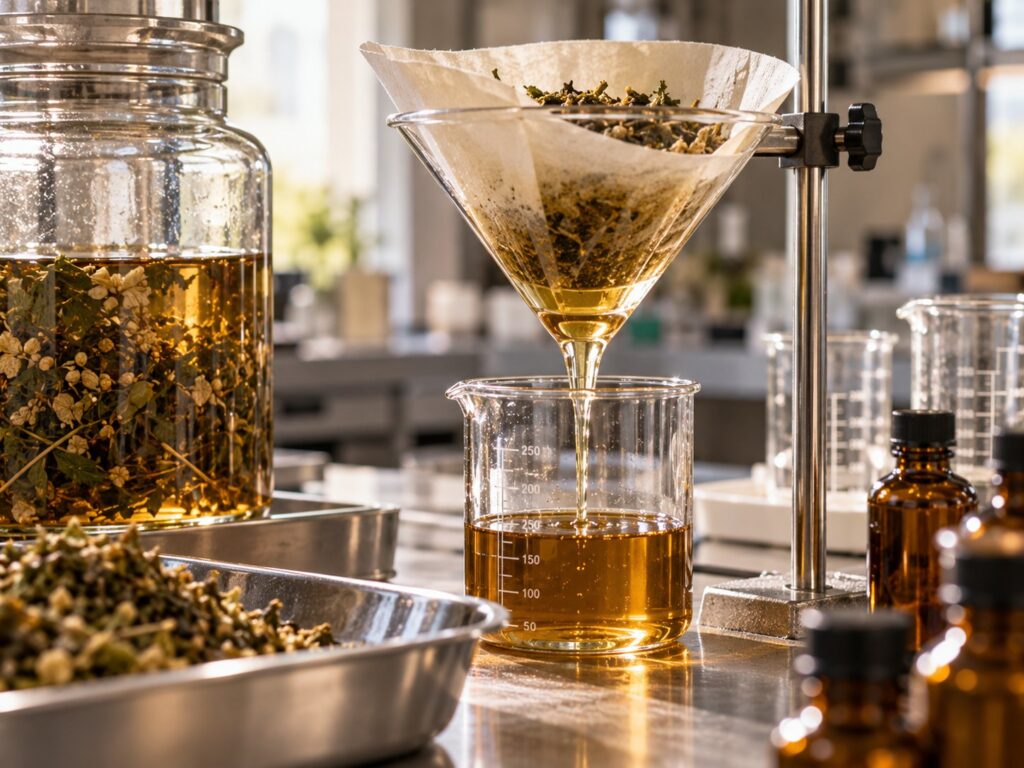
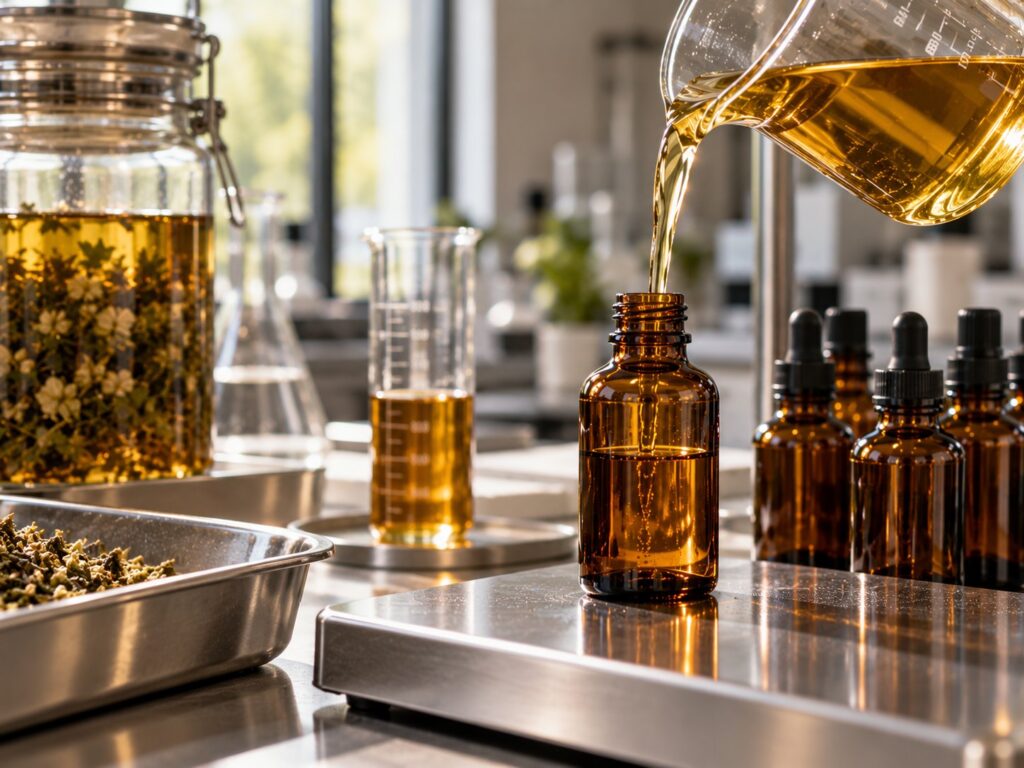
Conceptual illustrations, not documentation of our production process.
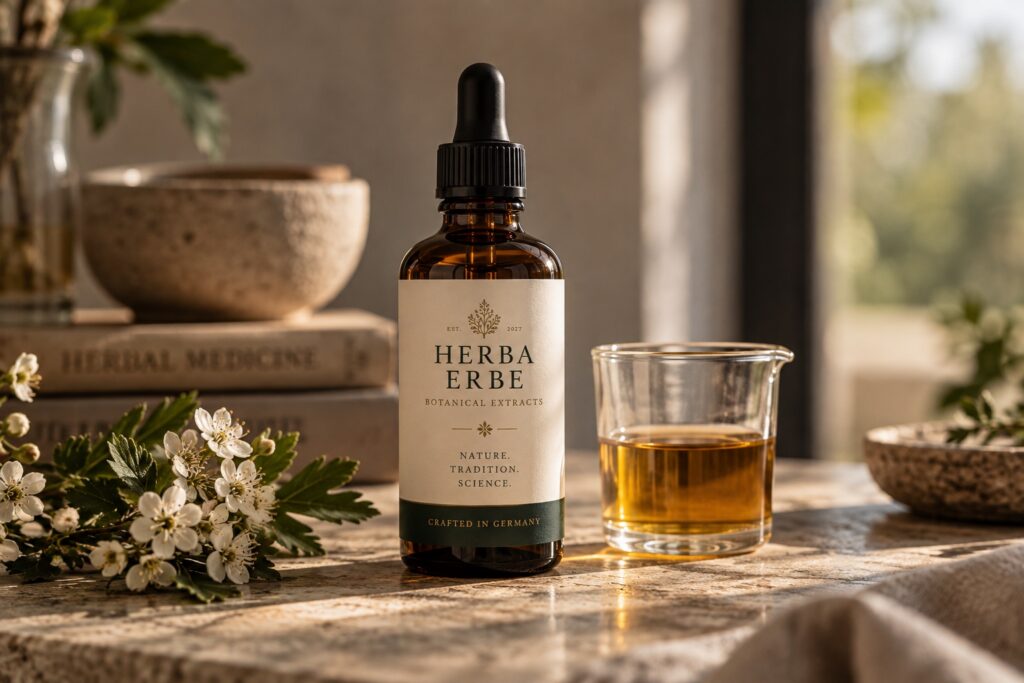
IN DEVELOPMENT
An extraction system still in development
Haus der Heilpflanzen is exploring alcohol-free botanical preparations. A manufacturing partner has not yet been selected. The final extraction system, composition, concentration and packaging will be developed with the selected partner and depend on the validated formulation.
Evidence for other medicinal preparations does not establish the effects of a future alcohol-free extract. Hawthorn is being explored as a possible later addition rather than part of the initial launch range.
SAFETY
Using Hawthorn Safely
Hawthorn deserves particular care because people interested in it may already have cardiovascular symptoms or take cardiovascular medication.
Medication
People taking prescription medication, particularly cardiovascular medication, should discuss hawthorn use with an appropriately qualified healthcare professional.
Pregnancy and breastfeeding
Safety information for hawthorn during pregnancy and breastfeeding is limited. Hawthorn preparations should therefore only be used in these circumstances following appropriate professional advice.
Heart-related symptoms
Hawthorn should not be used to delay diagnosis or medical treatment. Chest pain, fainting, significant shortness of breath, unexplained swelling, or persistent or worsening heart-related symptoms require appropriate medical assessment.
Possible unwanted effects
Reported adverse effects from hawthorn preparations are generally uncommon. Gastrointestinal symptoms, dizziness and other nonspecific reactions have been reported.
SOURCES
Research & References
Explore the scientific publications, regulatory assessments and historical sources that inform this profile.
European medicinal assessment
The European Medicines Agency’s monograph and assessment report describe the medicinal assessment of hawthorn leaf and flower. The 2025 revision remains a draft on EMA’s current listing and should not be read as an adopted monograph.
Human clinical research
SPICE and HERB-CHF investigated defined hawthorn preparations alongside standard heart-failure treatment. Their findings concern the preparations, populations and outcomes studied, and do not automatically apply to another hawthorn product.
Reviews and supporting research
The Cochrane review examines controlled heart-failure trials. The 2025 blood-pressure review brings together older trials from differing clinical settings. These reviews address different questions and retain preparation-specific limitations.
References & Further Reading
- (2016). European Union herbal monograph on Crataegus spp., folium cum flore. Official document
- (2016). Assessment report on Crataegus spp., folium cum flore. Official document
- (2025). European Union herbal monograph on Crataegus monogyna Jacq. (Lindm.), C. laevigata (Poir.) DC. or their hybrids; C. pentagyna Waldst. et Kit. ex Willd.; C. azarolus L. Draft · Revision 1. Official document
- (2008). Hawthorn extract for treating chronic heart failure. Cochrane Database of Systematic Reviews. DOI: 10.1002/14651858.CD005312.pub2
- (2008). The efficacy and safety of Crataegus extract WS 1442 in patients with heart failure: The SPICE trial. European Journal of Heart Failure. DOI: 10.1016/j.ejheart.2008.10.004
- (2009). Hawthorn Extract Randomized Blinded Chronic Heart Failure (HERB CHF) Trial. European Journal of Heart Failure. DOI: 10.1093/eurjhf/hfp116
- (2025). Hawthorn (Crataegus spp.) Clinically Significantly Reduces Blood Pressure in Hypertension: A Meta-Analysis of Randomized Placebo-Controlled Clinical Trials. Pharmaceuticals. DOI: 10.3390/ph18071027